

Wine and Food Pairing: The Art of Balance
Wine, at its core, was never meant to be enjoyed alone. For centuries, it has been part of the table — a companion to the meal, not a drink set apart from it. Long before anyone wrote down a single pairing rule, people were already discovering, meal by meal, which bottle made a dish taste better and which one quietly ruined it. And that instinct is exactly where this topic gets interesting — not as a fixed set of rules, but as a way of paying closer attention to what’s on your plate and in your glass.
So it’s worth starting with the question that trips up so many new wine drinkers: what should I actually eat with this bottle? Here’s the good news — wine and food pairing isn’t a rigid science with a long list of rules to memorize. It’s closer to instinct than most people think, once you understand a few foundational ideas. And once those ideas click, they open the door to a much bigger, much more enjoyable conversation.

Rule One: Balance, Not Domination
A great wine and a great dish don’t automatically make a great pairing. What matters is that neither one overwhelms the other. A rich, heavy dish can make a light wine taste thin and forgettable; a bold, powerful wine can just as easily crush the subtle flavors of a delicate dish. The simplest rule of thumb: light dishes call for light wines, and rich dishes need wines with enough depth to match them.
This is also where pairing starts to feel less like a rulebook and more like a conversation between two things that were, in a sense, both shaped by a place and a season. A wine made from grapes grown under intense summer heat tends to carry more weight and richness — not unlike the hearty dishes that come from the same kind of climate. It’s a small reminder that food and wine were never really separate stories to begin with.
Acidity Is Your Best Friend at the Table
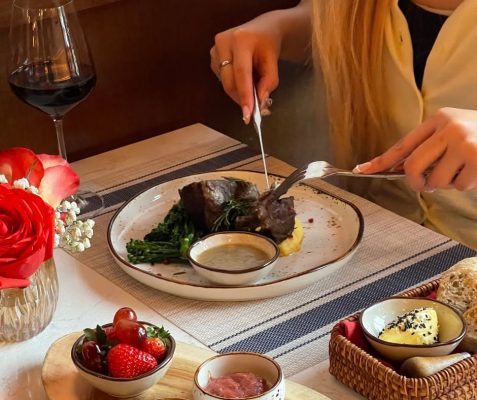
One of wine’s most underrated qualities is its natural acidity. That brightness is what cuts through rich, oily, or fried foods and resets your palate between bites. It’s also why a crisp, chilled white wine is often the safest choice across a wide range of dishes — the acidity does the heavy lifting.
Acidity isn’t just about “cutting through” richness, though. It also plays with the acidity already present in a dish — a squeeze of lime, a splash of vinegar, a tomato-based sauce. Matching a wine’s brightness to a dish’s own sourness, rather than fighting it, is often what separates a pairing that feels effortless from one that feels slightly off.

Sweetness and Spice: Two Things to Watch
With spicy dishes, a wine with a touch of natural sweetness helps tame the heat rather than intensify it. On the flip side, with sweet desserts, choose a wine that’s at least as sweet as the dish — otherwise the dessert will make the wine taste flat and lifeless by comparison.
There’s a broader idea hiding inside this rule: wine and food don’t just need to “match” in intensity — they need to match in the right direction. A wine that’s slightly sweeter, slightly brighter, or slightly bolder than the dish it’s served with usually works better than one that falls just short. It’s a small asymmetry worth remembering the next time you’re unsure which bottle to open.
Beyond Flavor: Texture and Temperature Matter Too
Flavor tends to get all the attention in pairing conversations, but texture and temperature quietly do a lot of the work as well. A creamy sauce often calls for a wine with a certain roundness on the palate, while a crisp, fried texture is beautifully offset by a wine served properly chilled. Even the temperature at which a wine is poured changes how it interacts with a dish — a red wine served too warm can taste heavier and more alcoholic than intended, throwing off a pairing that would otherwise have worked.
There’s No Fixed Formula — Only a Starting Point
Most “rules” of wine pairing were never handed down as strict formulas. They were built up over generations of trial, error, and taste. Everyone’s palate is different, and every meal is different — the real joy of learning to pair wine is in the experimenting, not in getting it perfectly right the first time.
That’s also where this topic keeps opening up. There’s a whole layer still to explore beyond these basics: how a region’s traditional wines pair naturally with its traditional dishes, how pairing shifts depending on the occasion — a quiet weeknight dinner versus a celebration — and how the same bottle can taste completely different alongside two different meals. Each of those is really its own story worth telling.
If you’d like an easier way to start that journey, Wineup’s monthly wine subscription is curated across a range of styles — from light, easy-drinking bottles to wines with more depth and character — so you can explore your own palate one month, and one bottle, at a time.