How to Read a Wine Label in 60 Seconds: 5 Things to Check Before You Buy
Standing in front of a wine shelf full of similar-looking labels, many people end up choosing a bottle just because of a pretty design. But with 60 seconds and the right eye, you can actually predict how good a bottle will be, what food it pairs with, and whether it’s worth the price. Here are the 5 most important things to look for on a wine label before you decide.
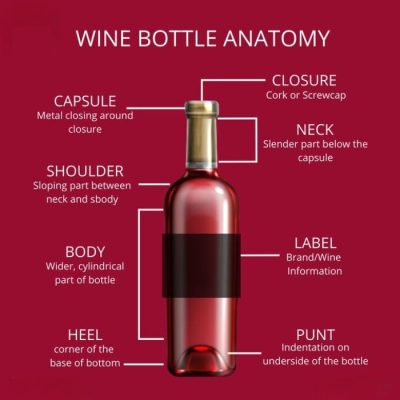
1. Producer (Château/Domaine/Winery)
This is the “signature” of whoever made the wine. In France you’ll see “Château…” or “Domaine…”, in Italy “Tenuta…” or “Azienda Agricola…”, in Germany “Weingut…”. A producer with a long history and strong reputation usually means consistent quality year after year. This is also the first clue that helps you tell genuine imported wine from bottles of unclear origin.
2. Wine Region (Appellation)
- Old World wines (France, Italy, Spain, Germany…): labels usually list only the region (Bordeaux, Chianti, Rioja…) without the grape variety, since local laws already dictate which grapes are grown there.
- New World wines (USA, Australia, Chile, Argentina, South Africa…): labels typically state both the region and the grape variety, e.g. “Napa Valley Cabernet Sauvignon”.
Knowing how to read this helps you anticipate the wine’s style: cooler climates tend to produce lighter, higher-acid wines, while warmer regions produce richer, riper-fruit wines.
3. Grape Variety and Vintage
If a grape variety is listed, most countries require that grape to make up at least 75-85% of the blend. The year printed on the label — the vintage — refers to the year the grapes were harvested, not when the wine was bottled. This matters because each growing season has different weather conditions that directly shape the final flavor. Some bottles carry no vintage (Non-Vintage/NV), usually blends from multiple years designed to keep a consistent house style, common in Champagne.
4. Quality Classification
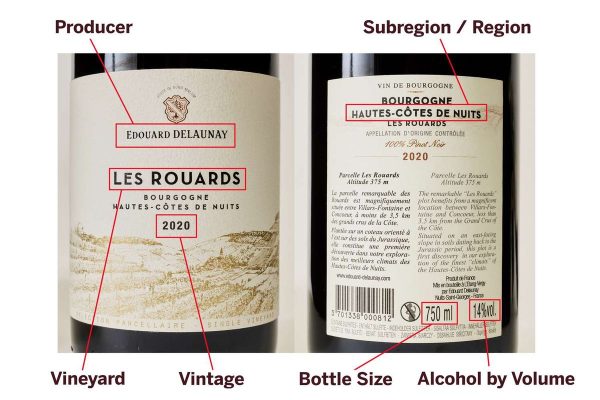
This is the detail most people skip, yet it’s one of the most useful for comparing price against quality:
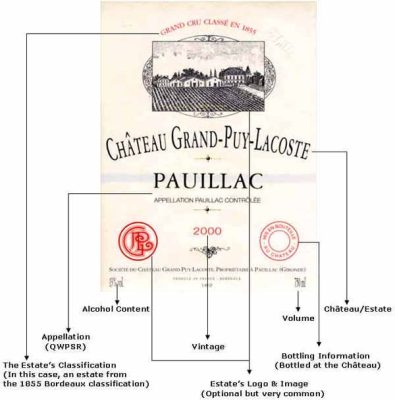
- France: AOC/AOP > IGP > Vin de France
- Italy: DOCG > DOC > IGT > Vino da Tavola
- Spain: DOCa > DO > Vino de la Tierra
The higher the classification, the stricter the rules on vineyard location, yield, and winemaking technique — meaning tighter quality control overall.
5. Alcohol Content and Volume
Alcohol by volume (typically 11-15% for still wine) tells you how “full-bodied” the wine feels and hints at how ripe the grapes were at harvest. The standard bottle size is 750ml, while smaller formats (375ml) or Magnums (1.5L) are usually reserved for special occasions. For wine imported into your country, it’s also worth checking for an official import label or seal — a sign the bottle came through a legitimate channel from a trustworthy wine retailer, rather than an unverified source.
Still Feel Overwhelmed Choosing?
Even knowing all five points above, picking the right bottle for your taste and your meal still takes time and experience. If you’d rather skip the guesswork of decoding labels every time you shop, Wineup’s Wine Subscription is worth considering: each month, you receive bottles hand-picked by Wineup’s own wine specialists, delivered with the story behind the region and the producer — like having someone read the label for you every month, so all you have to do is enjoy the wine.